.png)







Swiss insurance stability masks a growing talent crisis
Switzerland’s insurance sector continues to be a global benchmark for regulatory discipline and balance sheet strength. With over CHF 660 billion in consolidated assets and a premium volume of CHF 66 billion, the market remains internationally relevant despite its relatively small domestic footprint. But today, the sector’s greatest challenge is no longer growth. It’s leadership.
To better understand how the industry is evolving, William Andreae-Jones, Head of Financial Services at Swiss recruitment specialist Robert Walters, shares his insights into the leadership challenges insurers are facing and the type of talent that will define the next phase of strategic success.
A business model under strain
Premium growth in the Swiss domestic market remains modest. Non-life premiums rose just 1.2% in 2024, while life insurance continues its long-term structural decline. Reinsurers - despite their global scale - are under mounting pressure from secondary peril volatility, inflation-linked claims and surging retrocession costs. In 2023, Swiss Re’s property-catastrophe combined ratio reached 109.3%: the highest in five years.
In response, insurers are shifting their focus to higher-margin, more complex offerings such as cyber, structured reinsurance, and ESG-linked products. However, these aren’t simple product innovations; they require a new breed of leadership.
“We’re seeing an inflection point where technical expertise alone is no longer enough,” says William at Robert Walters Switzerland. “Insurers are seeking leaders who can operate across functions, regions, and regulatory domains. It’s a transformation not just in products, but in mindset.”
A shallow talent pool
According to PwC’s 2024 Swiss Insurance Executive Survey, 54% of executives cited inadequate leadership bench strength as one of the top three risks to long-term performance. A Swiss Board Institute study revealed that fewer than 30% of major insurers had formally identified an internal CEO successor.
The pressure is particularly acute in roles tied to sustainability and regulation. ESG and regulatory affairs functions have seen a 22% year-on-year rise in open positions, fuelled by new FINMA sustainability rules and mounting investor scrutiny. Yet the talent supply remains insufficient.
“Actuarial and compliance functions are facing a perfect storm,” William notes. “These roles require both deep technical understanding and strategic vision, and the pool of candidates offering both is incredibly limited.”
Leadership models are shifting
The traditional Swiss insurance executive, typically a specialist rising through underwriting, actuarial, or finance is no longer the default profile. Boards are now looking for broader capabilities. Capabilities that are seen as most helpful centre around capital market fluency, having real digital awareness, and regulatory instinct. In reinsurance especially, cross-disciplinary expertise is in high demand.
“We’re increasingly placing candidates from outside the traditional insurance pipeline,” says William. “Think banking, fintech, consulting, or asset management. Clients want individuals who bring an external lens, people who challenge legacy thinking.”
Swiss insurance CEOs average 7.1 years in tenure, offering the appearance of stability. But this masks a deeper issue, namely generational renewal. Many current leaders built their careers in an environment defined by stable rates, domestic channels, and product-driven growth. Today’s volatile, global, and tech-led landscape demands a very different skill set.
Internal development isn’t catching up
While Swiss insurers are known for robust technical training, few have invested meaningfully in cross-functional leadership development. Deloitte’s 2024 survey found that only 18% of insurers offer formal executive rotation programmes. Meanwhile, more than 40% of mid-level managers said they were likely to leave the insurance industry within five years, citing lack of strategic exposure and career progression.
“There’s a gap between aspiration and action when it comes to leadership development,” William warns. “Everyone talks about transformation and agility, but the internal talent engines to drive that change are still underpowered.”
Strategic talent will be the deciding factor
For boards, CHROs, and executive search partners, the message is clear: the next phase of success in Swiss insurance will depend on the ability to attract and retain strategic leadership talent. This may require looking beyond sector boundaries.
Key pressure points include:
ESG and disclosure leads with both regulatory and capital deployment experience
Data-native actuaries, particularly in cyber, health, and behavioural pricing
Multi-market general managers capable of leading across Zurich, EMEA, and Asia
Investment leaders’ adept in volatility, ESG integration, and IFRS 17 compliance
“The organisations that win in this market will be those that take talent strategy as seriously as capital strategy,” William concludes.
In a sector built on precision and risk assessment, it’s time to treat leadership as a measurable asset.
Swiss insurers still enjoy significant advantages like credibility, capital strength, and global reach. But these are no longer differentiators in and of themselves. In 2025, the defining competitive factor will be human capital.
In a market shaped by digital transformation, regulatory evolution, and geopolitical uncertainty, the winners will be those who see leadership not as a given, but as a core strategic investment.
Want to know more?
For more tips and advice, explore our hiring advice. Contact one of our offices or upload your vacancy today.
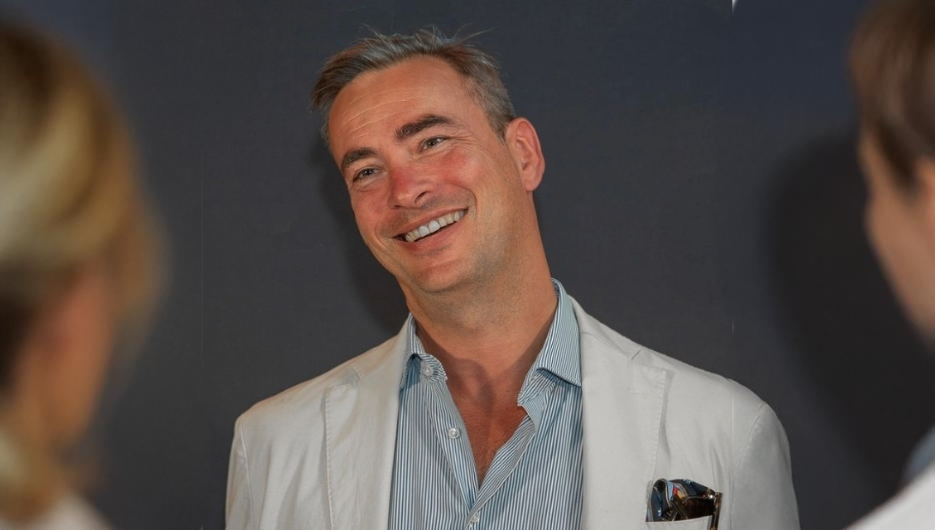
William Andreae-Jones
Head of Financial Services | Robert Walters SwitzerlandRelated content
View All
Swiss CIOs and CTOs are being asked to deliver more with less. Two thirds expect their IT budgets to rise in 2026, while most also plan to keep IT headcount stable or even reduce it. In this environment, the quality of your technology team is a direct competitive advantage. Jordan Cajot, Business Di
Read More
Employee retention has become one of the biggest challenges facing employers today. While attracting talent is difficult enough, keeping good employees engaged and motivated over the long term is often even harder. Many businesses focus heavily on recruitment but spend far less time thinking about w
Read More
New Robert Walters research highlights growing pressure on employers to balance workforce engagement, progression expectations and cost control Almost one in four (23%) Swiss professionals say they feel less positive about their role following their last performance review, according to new research
Read More